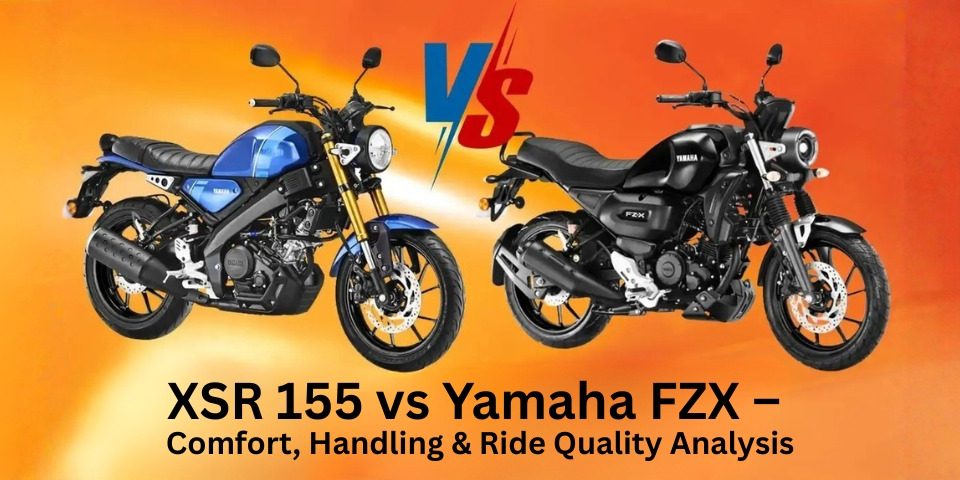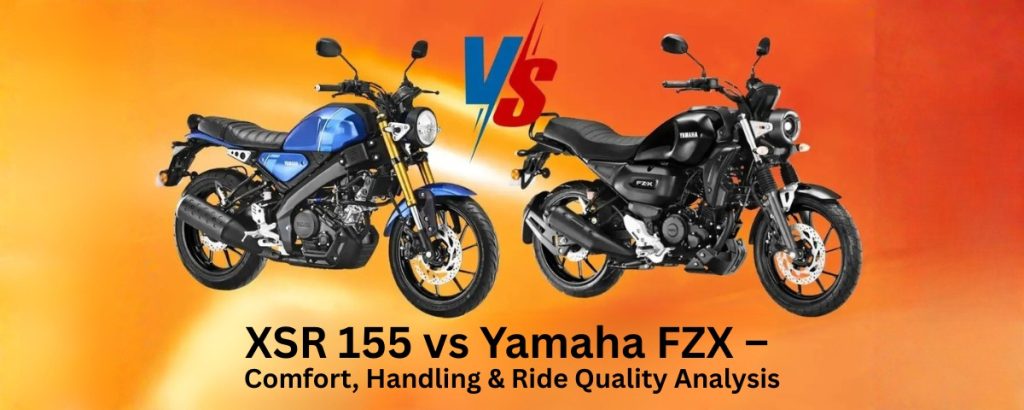
XSR 155 vs Yamaha FZX – Comfort, Handling & Ride Quality Analysis
December 13, 2025
Must-Visit Breakfast Spots on Bangalore’s Best Riding Routes
January 15, 2026

If you’re planning to buy a stylish, everyday motorcycle in 2025, chances are you’ve already stumbled upon this comparison—Yamaha XSR 155 vs TVS Ronin. And honestly, it’s a fair dilemma. Both bikes target riders who want something different from the usual commuters, without jumping into full-blown performance machines.
So which one actually makes sense for you? Let’s break it down—no hype, just real-world perspective.
Design & Road Presence:
In my opinion, design is where these two bikes show very different personalities.
The Yamaha XSR 155 carries that classic neo-retro vibe. Round headlamp, clean lines, minimal bodywork—it feels premium and slightly international. It’s the kind of bike people turn around to look at twice.
The TVS Ronin, on the other hand, feels more rugged and muscular. It’s modern-retro but with a tougher stance, wider tank, and a more commanding road presence. If you like your bike to look bold and practical, Ronin ticks that box.
Engine & Performance:
Here’s where the numbers start telling a story.
Yamaha XSR 155:
- Engine: Liquid-cooled 155cc
- Power: 18.4 HP
- Torque: 14.2 Nm
- Kerb Weight: 137 kg
The XSR feels light, quick, and refined. It loves being revved and feels smooth in city traffic. According to my experience, this engine is perfect if you enjoy responsive riding rather than brute force.
TVS Ronin 225:
- Engine: Oil-cooled 225.9cc
- Power: 20.4 HP
- Torque: 19.93 Nm
- Kerb Weight: 160 kg
Ronin clearly has more torque. You’ll feel it especially at low and mid speeds. It’s relaxed, pulls cleanly, and doesn’t demand aggressive riding—great for daily use and occasional highway runs.
Ride Comfort & Handling:
Both bikes come with USD forks at the front and a monoshock at the rear, which is impressive in this segment.
- Seat Height:
- XSR 155: 810 mm
- Ronin: 795 mm
Shorter riders might feel more confident on the Ronin. The XSR is slightly taller but feels lighter and more agile.
In city riding, the XSR feels flickable and easy to maneuver. Ronin feels planted and stable, especially on bad roads. If comfort is a top priority, Ronin edges ahead.
Braking, Tyres & Practicality:
Yamaha XSR 155:
- Brakes: 282 mm front / 220 mm rear
- Tyres: 100/80-17 (F) | 140/70-17 (R)
- Fuel Tank: 10 litres
TVS Ronin:
- Tyres: 110/70-17 (F) | 130/70-17 (R)
- Fuel Tank: 14 litres
Ronin clearly wins in fuel tank capacity—fewer fuel stops, especially for longer rides. XSR’s braking setup feels sharp and confidence-inspiring, while Ronin focuses more on stability.
Price & Value for Money:
- Yamaha XSR 155: ₹1.49 lakh (approx)
- TVS Ronin: ₹1.24 lakh to ₹1.59 lakh
If the budget is tight, Ronin offers more flexibility. The XSR, though pricier, justifies it with refinement, weight advantage, and Yamaha’s reliability.
If you’re exploring the XSR, it’s always a smart move to check with authorised Yamaha dealers in Bangalore like Perfect Riders, where you can get proper guidance, test rides, and genuine service support.
Conclusion:
Choose Yamaha XSR 155 if you want: Lightweight handling, Premium neo-retro design, Smooth, refined performance, and A bike that feels sporty yet classy.
On the other hand, choose TVS Ronin if you want: More torque and relaxed riding, Better comfort for daily use, Bigger fuel tank, and comparatively better value for money.
If you’re still confused, drop by Perfect Riders, one of the trusted names for Yamaha motorcycles. At the end of the day, the right bike isn’t just about numbers—it’s about which one feels right when you twist the throttle.